
The Art of Deception: Real from Fake
What is a fake?
The answer to this question is not as simple as it seems. For the most part, fakes existed for their monetary value. The etymology of the word “fake” comes from the German word fegen which means “to furbish” or “to clean up”. However, when considered with its literal meaning of “not genuine” or “counterfeit”, there is a deeper more sinister level one needs to pay heed to - that of deception. “Deception is a much more complicated business than the making of an object. It is only the outward manifestation of a web woven of many strands of human aspiration and action, in which the deceived is as important as the deceiver.” In the arts, forgery and fakes have existed for over two thousand years. Post the Renaissance period, when art moved from being under the realm of the Church to being expressions of oneself, there was an increase in prosperity of the middle class which created a high demand for art. There was a massive increase in the value of art - it had become a commercial commodity. Given that the Renaissance encouraged the individuality of the artist, this value soon began to depend on this distinctiveness, and artists began to sign their work. Signed pieces had a higher value, which resulted in fraudulent signatures that began to appear in the open market. So then, are all fakes spurious in intention and nature?
Facets of Deception
The umbrella term ‘fake’ also includes the likes of replicas, copies and imitations. This throws the proverbial spanner in the works because it challenges the assumption that fakes are inherently only copies of originals done by the great masters made to deceive one and all, and as a result is regarded as a second rate shady activity. However, to really look at this argument, let’s introduce a few more elements to to the table that add new dimensions:
For one, in many cultures, copying is actually a form of learning and acquiring a skill based on a particular style set or manner of handling different kinds of media. It was used as a way to maintain or pass on the traditional forms and skills. For example, during the Renaissance, artists would hire apprentices to learn their art under their guidance. In order to do so, the apprentice would spend many an hour copying their Master’s work in order to understand the technique and the medium used. As payment for these pieces, the artists would often sell these works under their own names - which adds an interesting twist to the whole principle of forgery. In addition, many very famous artists of the time also copied artwork of others. For example, Michelangelo copied the work of his master, Domenico Ghirlandaio, in 1496 and treated it with acidic earth so as to cause it to look ancient. He then sold it to a dealer, Baldassare de Milanese who, in turn, sold it to Cardinal Riario of San Giorgio. The cardinal learned of the forgery and demanded his money back, however, Michelangelo was allowed to keep his original share.
Secondly, from a different perspective, there still exists a belief that religious subjects have to be treated in a particular way in order to stay true to its depiction of its truth. In these cases, changing the way a certain subject is treated can be looked upon as being disrespectful or even blasphemous.
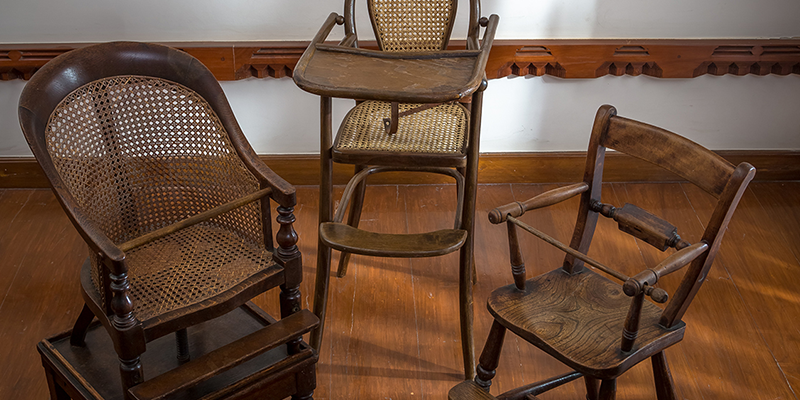
A third angle that can be discussed is the increasingly common trend of nostalgia for the past which has resulted in the production of substitutes for the otherwise limited supply of genuinely aged products: ‘antique’ furniture, ‘Renaissance jewellery’, or ‘Georgian’ houses to name a few. At this point, it is interesting to muse upon the following thoughts - when a craftsman is called upon to create a piece from a particular era, is it an imitation, or a fake? And if the dealer who commissioned the piece sells it as an antique belonging to a particular date or century, does it then become a fake, or does the original intention of the craftsman override the erroneous nature of the resale? Who gets hauled up for what crime?
Types of Forgery
Looking into the world of forgery, there are essentially three types of forgers - the person who creates the fake; the person who discovers a piece and attempts to pass it off for something it actually isn’t, hoping to preserve the value of it; and the person who knows the piece they have is a fake and goes ahead and sells it as an original anyway. For the first type of person - the actual creator - they are usually artists who perhaps tried to break in to the market but were unsuccessful, and therefore resorted to forgery. Some claim to be forgers in order to make a statement on the high-handedness and snobbery of the art world. Some forgers who have already been exposed choose to sell their work legitimately proclaiming them to be copies, and have actually become famous because of this in their own right. For the second and third categories of forgers, there are many auction houses and dealers that have been known to accept and sell fakes. Some go as far as creating paper trails and even inserting pictures of the forgeries into archival documents of well reputed auction houses and galleries.